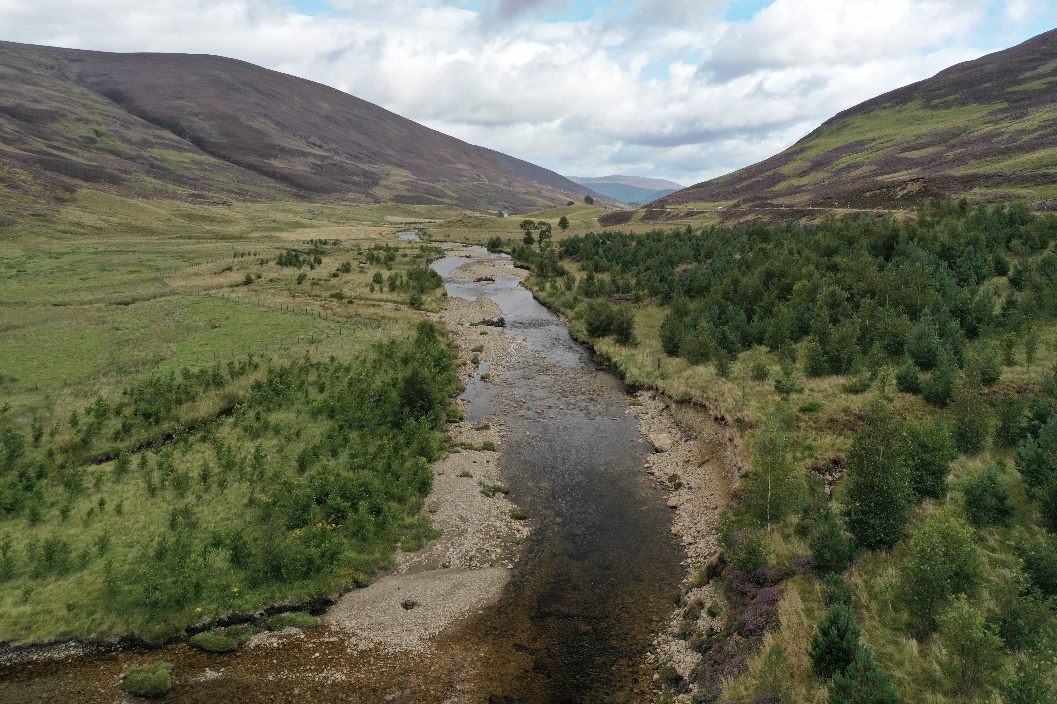
River Clunie, August 2025 © Dee District Salmon Fishery Board
With highs come lows, and the high temperatures we have experienced this summer have resulted in worryingly low water levels in many rivers including the Dee. Further droughts can be expected. At the same time, the Scottish Environmental Protection Agency (SEPA) has warned that we will also experience more flooding, with heavy rain events following these hot dry spells.
|
River Clunie, August 2025 © Dee District Salmon Fishery Board |
Climate-related challenges also include lack of snow in winter. These factors combine to spell disaster for nature in Scotland's upland rivers. The time to improve the climate resilience of our rivers is now. So, what can we do to mitigate these harmful effects, urgently?
Innovative conservation efforts can provide a catalyst for ecological change, restoring local rivers to healthy and resilient environments, and enabling our critically endangered species to have a chance of recovery before it's too late.
Increasing biodiversity and improving the physical health of our rivers should be the main aim with any restoration works. In the River Dee catchment, one innovative use of locally-sourced windblown trees is replicating the impact of tree-fall into the water course - as would have happened naturally, thousands of years ago.
|
Large Woody Structure, Middle Clunie, August 2025 © Dee District Salmon Fishery Board |
Over the last eight years, working with partners including SEPA and the Scottish Government's nature agency NatureScot, the River Dee Trust and Dee Fishery Board have introduced large woody structures (LWS) to its river restoration programme. These are simply the root balls of storm-fallen trees.
They have been embedded at locations carefully chosen to benefit the river system in tributaries of the Dee such as the Muick and Clunie, where they are being monitored robustly to understand their effectiveness over time.
Though they are a relatively new concept in Scotland, studies from elsewhere, for example Nova Scotia, have shown that LWS are having a positive impact on river biodiversity, providing hope for the web of wildlife here in the Cairngorms.
This includes our unique and endangered Atlantic salmon population. Fish are already using these structures. Through our ongoing monitoring of these sites, we have witnessed juvenile Atlantic salmon using LWS to shelter, potentially from heat and predators. By providing these young fish with an environment to grow into healthy migrating smolts, we are boosting the probability that they will return as spawning adults to use the gravels created by the effect of water flow around the structures.
The River Dee team are carefully monitoring juvenile salmon close to the sites where LWS have been installed, including the size and health of the fish. Invertebrate monitoring is taking place to assess density and variety of species in these locations, and drone imagery analysis is looking at the physical alterations to habitat. The aim is to quantify how LWS influence local habitats and species so that we and other practitioners can develop full restoration plans with predicted outcomes.
Many rivers in Scotland are now embracing the need for urgent action. Restoration works across the country include reopening of river channels and re-meandering projects, tree planting and debris dams being built - and of course, embedding LWS.
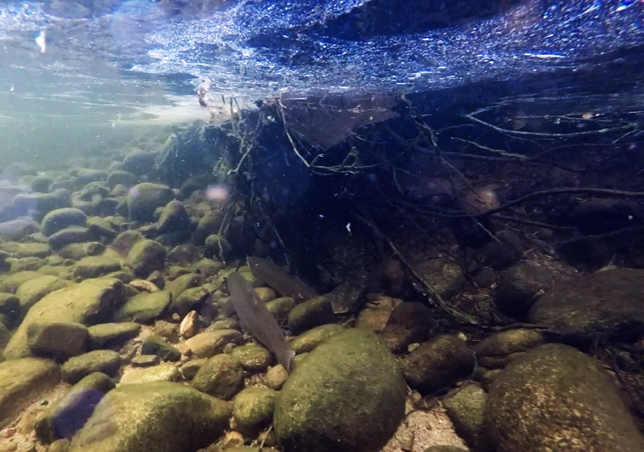 |
Fish under Large Woody Structure, August 2025 |
There is consensus that we must all work at pace to deliver what nature needs urgently, and we need to be brave to deliver this. The future of our rivers, our endangered species, and our very planet, depends on it.
The author is River Director for the Dee District Salmon Fishery Board & River Dee Trust.
Please let the webmaster know if there are problems with viewing these pages or with the links they contain.