© Aberdeen Mountain Rescue Team
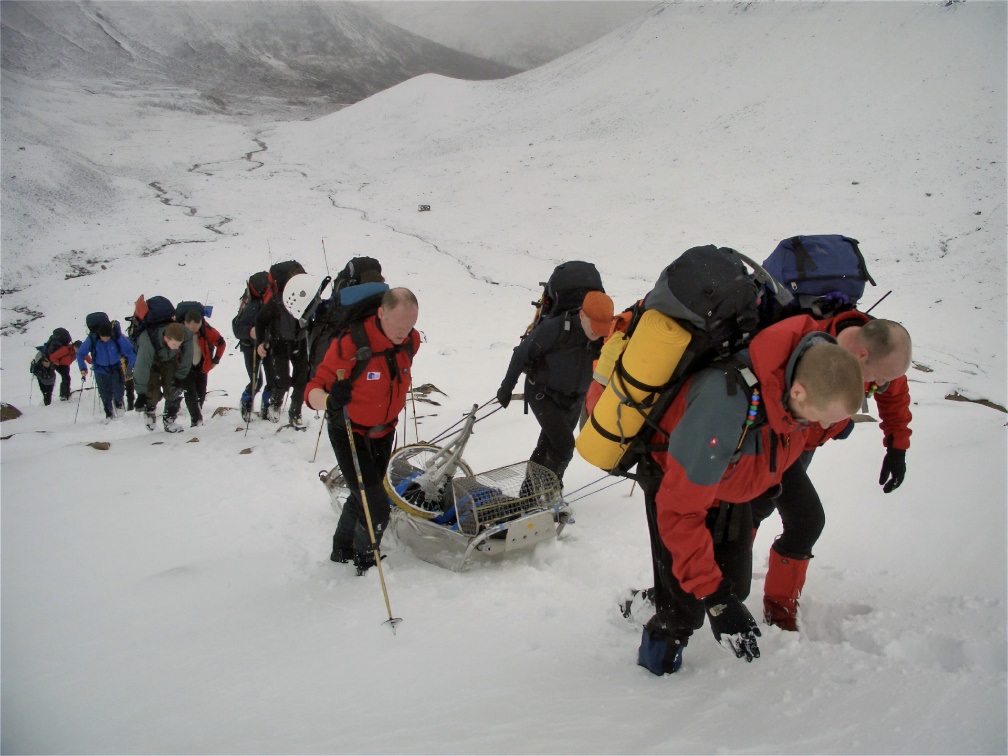
Aberdeen Mountain Rescue Team came into being in 1964, initially drawing most of its members from the then very active Aberdeen Venture Club. Bill Marshall, the first Aberdeen Team leader, was responsible for bringing together a group from within the Club who he believed could provide a search and rescue capability to cover the Cairngorms and the lower hills of Deeside and Donside, a huge geographical area posing particular logistical difficulties. At the time, there was very little in the way of formal mountain rescue provision across Scotland; call-outs were largely undertaken by gamekeepers and ghillies, often pressed into service by the local Police Constable.
|
© Aberdeen Mountain Rescue Team |
During the late 1950s and early 1960s there had been various attempts to develop an organised mountain rescue service covering the main climbing areas in the Eastern Cairngorms. Early efforts had involved members of the Cairngorm Club, who had established and stocked the original first aid post in the corrie of Lochnagar. The creation of the Aberdeen Mountain Rescue Team acknowledged that a more formal system was needed to deal with the growing number of search and rescue incidents. Early in the Team's development, the Order of St John in Aberdeen provided garaging for a Team vehicle behind St John's Hospital in Albyn Lane, and also provided some financial assistance. And, through connections with the Balmoral and Mar Lodge Estates, the Team secured access to two buildings, at the Spittal of Muick and at Derry Lodge, which eventually developed into forward bases for training and call-outs, with extensive renovation and refurbishment.
Through the 1970s and into the 1980s, the number of Team members gradually increased. Given that it has always been based in the Aberdeen area, some 60 miles from the main tops of the Cairngorms, reliable transport is a very important element in the Team's operational effectiveness. A variety of vehicles have carried the distinctive Order of St John badge and the Team logo, and almost all the current vehicles, 5 long-wheelbase Landrovers with customised trailers, have been funded in whole or in part by the Order.
In the mid-1990s, with the sale of the St John's hospital, the Albyn Lane garaging was lost, but the Order generously provided a custom-built base at Elrick, some six miles to the west of the city, with garaging and training facilities, including an indoor rock wall, drying room and equipment store. For the first time, the Team had somewhere to dry and store equipment properly, and operational effectiveness was greatly improved.
Maintaining an effective Team demands substantial sums of money. For over 50 years the main source of funding has been an annual sponsored walk. Over the years, this has become something of a family affair, and many of those who participate now with their children were themselves introduced to the walk by their parents. To top funds up, we are grateful to a variety of individuals and organizations for donations.
 |
© Aberdeen Mountain Rescue Team |
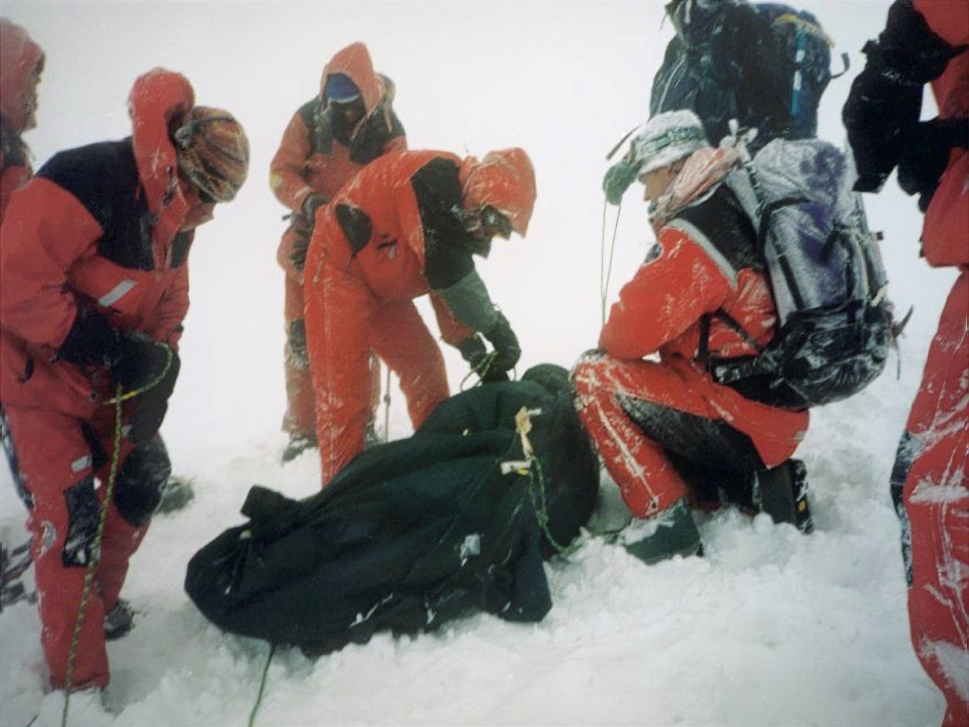
Most call-outs are centred in the Braemar and Ballater areas, with Lochnagar and the Central Cairngorms as the focus for many incidents, e.g. evacuating a crag-bound climber in the Corrie of Lochnagar, or searching for crashed military jets on Ben Macdui. However, like most mountain rescue teams, we have "hot spots" that are the focus of a significant number of call-outs. The team is part of Police Scotland's general emergency and disaster response, and is frequently used for low-level searches in difficult terrain, such as dense forest and sea cliffs. Bennachie, a popular and not overly challenging hill located some 30 miles from Aberdeen, is a fairly regular call-out venue, seeing a lot of incidents involving twisted knees and ankles. Many call-outs occur in darkness and in appalling weather - hence the need for rigorous training.
There is growing pressure on all mountain rescue teams, brought about by such things as the use of mobile phones to 'summon' help, often unnecessarily, and a litigation culture in which voluntary organizations such as rescue teams are very vulnerable.
 |
Aberdeen Mountain Rescue Team, Lochnagar © AMRT |
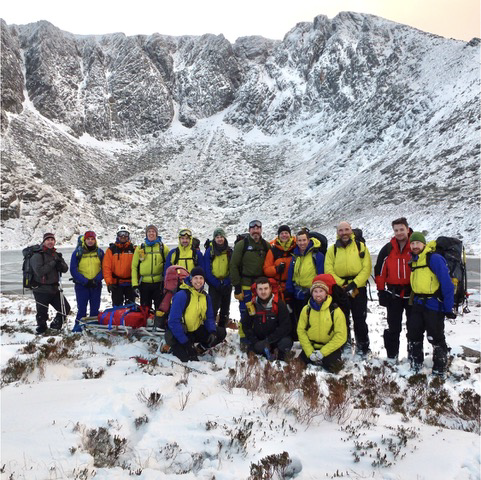
Present team membership is 30, including several with specialist medical training; indeed, the range of skills required by members is staggering. Some members have been involved for over 20 years and embody a wealth of mountaineering and mountain rescue expertise. Membership is open to anyone over the age of 18, providing they can demonstrate a sufficiently high level of fitness and mountaineering competence. It carries a potential 'on call' commitment of 365 days a year - team members have at various times spent Christmas Day, Hogmanay and New Year's Day taking part in call-outs! This, combined with a two-year probationary period and a fairly heavy training commitment, does create difficulties when it comes to attracting recruits.
Team members have a strong understanding of what it is that attracts people
to the hills. Whether it be the quest for adventure or simply a chance for some
solitude, we all have a sense of the attraction and the risk. The fact that a
group of people are prepared to give so much time and energy to help others
is testimony to the camaraderie that binds the hill-walking and
mountaineering community together. The future will hold many challenges,
and there is little doubt that the demands placed upon the Aberdeen Team
will continue to grow. However, we are confident that the Team is more than
up to the challenge!
Please let the webmaster know if there are problems with viewing these pages or with the links they contain.